
Valentine’s Day Scams: How Criminals use Love to Steal Your Information
Valentine’s Day is a time for connection, companionship, and love — and many seniors are turning to online platforms to meet new people. Unfortunately, scammers take advantage of this season by pretending to offer romance while secretly trying to steal money or personal information. The goal of this guide is not to discourage online relationships, but to help you recognize warning signs early so you can stay safe and confident online.
Part 1: Red Flags in Online Relationships
When “Romance” Becomes Risky
1. They Ask for Money, Gift Cards, or Cryptocurrency
Requests may start small and feel “temporary”
Common excuses:
Medical emergencies
Travel issues
Business problems
Scammers often prefer gift cards or cryptocurrency because they are hard to trace and impossible to recover
Rule of thumb: Someone you’ve never met in person should never ask for money.
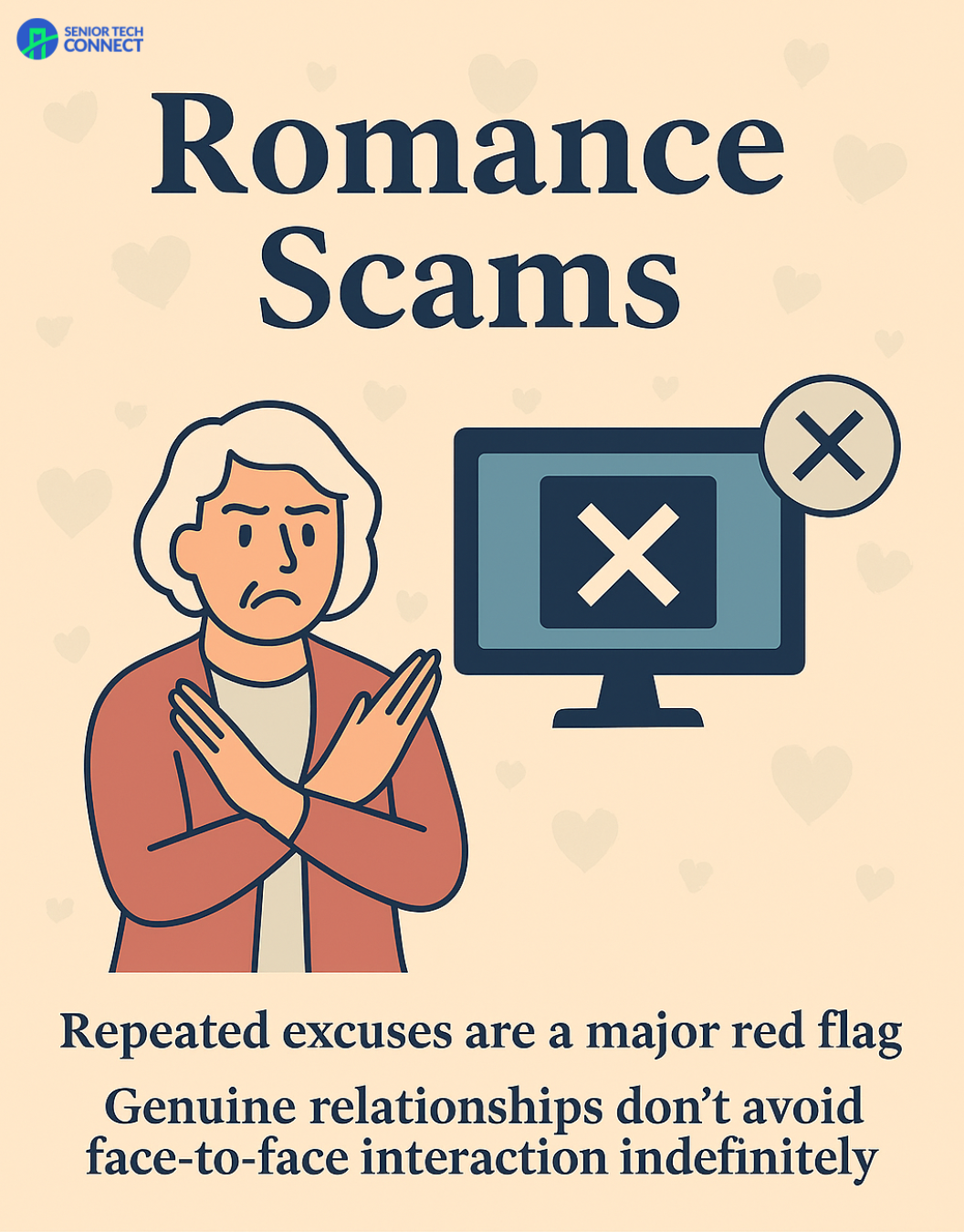
2. They Refuse Video Calls or In-Person Meetings
They may claim:
Their camera is broken
Poor internet connection
Work restrictions
Repeated excuses are a major red flag
Genuine relationships don’t avoid face-to-face interaction indefinitely
3. They Say “I Love You” Very Quickly
Scammers often rush emotional connection
They may call you their “soulmate” within days or weeks
Fast emotional attachment is used to lower your guard
Healthy relationships develop over time. Love should never feel rushed or pressured.
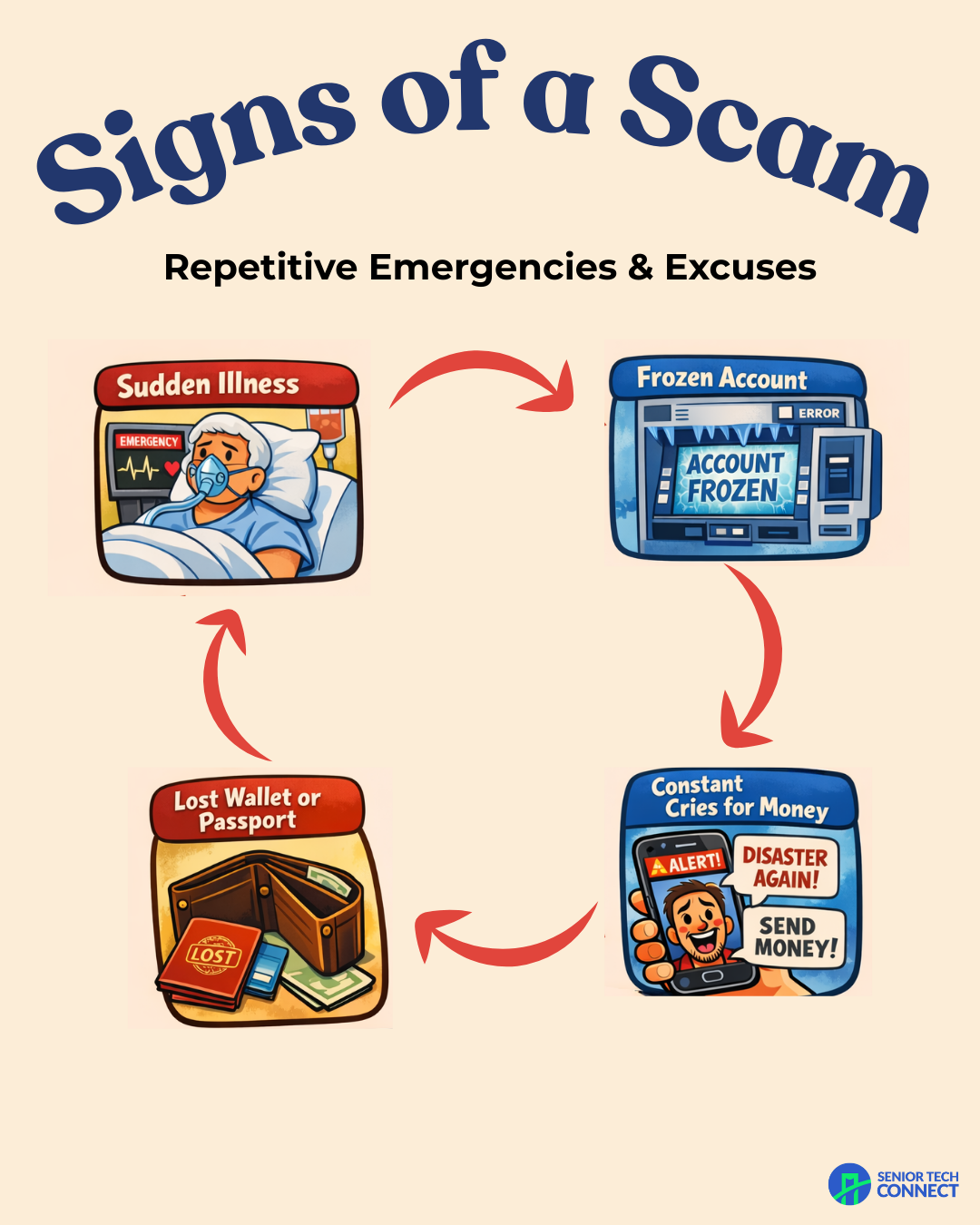
4. They Always Have a Crisis
Emergencies appear right when money or help is requested
Common scenarios:
Sudden illness
Frozen bank accounts
Lost wallet or passport
Crises repeat and escalate over time
Part 2: Never Send These Things Online — No Matter Who Asks
1.Never Share:
Gift card numbers or photos
Social Security number
Banking or credit card information
One-time passcodes or verification codes
No legitimate company, bank, or romantic partner will ever ask for these.
2. What To Do If Something Feels Off
Stop responding immediately
Do not send money or personal information
Talk to a trusted friend, family member, or tech advisor
Report suspicious accounts to the platform
3. Protecting Your Heart and Your Digital Life
Looking for companionship online can be a positive experience
Staying informed helps you enjoy connections without unnecessary risk
When in doubt, pause, verify, and ask for help
Stay Safe, Stay Informed
Looking for connection online can be fun and rewarding—but it’s important to stay alert to red flags. Remember: if something feels off, pause, verify, and reach out for help.
At Senior Tech Connect, we’re here to help you navigate the digital world safely. From spotting scams to protecting your personal info, we provide tips, guidance, and easy-to-follow advice so you can enjoy your online connections with confidence.